Selfie verification
Fake IDs sold online were beating the government-ID check we relied on, and about half the customers asked to use it never finished. I led design on the fix, a selfie checked for liveness and matched to the ID headshot, and more than 97% of the customers who start it after the ID scan finish it.
- Identity
- Biometrics
- Research
- Selfie completion, after the ID scan
- >97%
- Median, capture to confirmation
- 19 s
- Instant spend regained
- $90M / yr
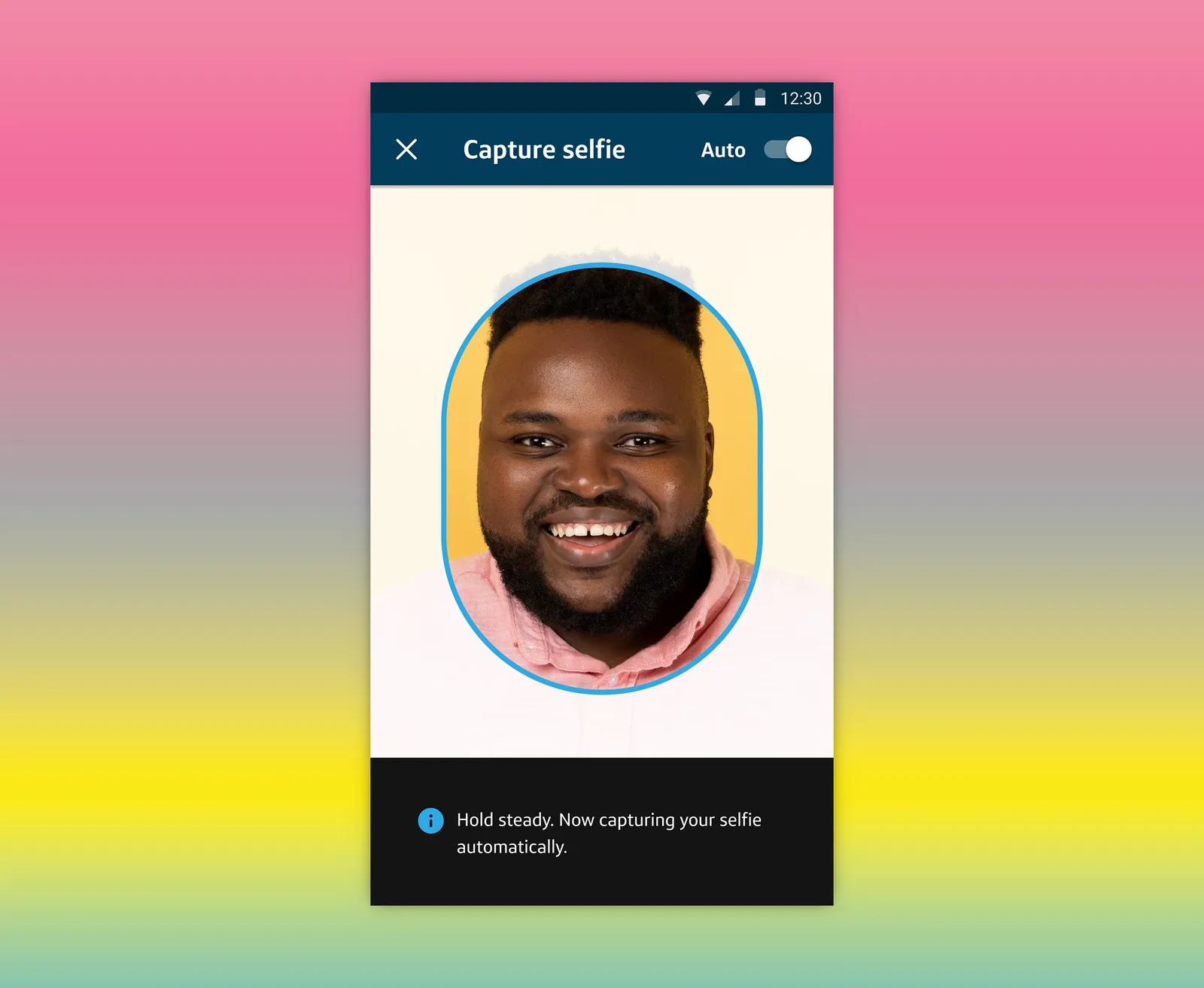
The problem
Identity verification is the step people quit. About half of the customers asked to prove who they were with a government ID alone dropped out and never finished.
The ID check was also losing to the people it was built to stop. Fake IDs and stolen identities are sold openly online, and a photograph of a document proves only that someone had a document to photograph.
We paired the ID with the camera. The customer takes a selfie, and an algorithm confirms the face is live before matching it to the headshot on the ID in real time. A printed photo or a replayed video fails that check.
Nobody wants to take a selfie for their bank. The new check put one more screen in front of people who were already walking away, so it had to be fast and simple enough to cost them almost nothing. The target was that almost every customer who started the selfie would finish it.
The work
Research first
I started with the market: 31 companies, 14 selfie experiences, 6 industries, surveyed to learn where these flows succeed and where they insult people. We benchmarked three biometric vendors against the National Institute of Standards and Technology’s public leaderboard and chose one in the top 20 of more than 200 tested. That research won funding in October 2022, a pilot in early 2023, and a full production launch that April.
Biometrics in a bank should make a designer nervous. We wrote three principles before building — do no harm, pass the headline test, hold the bar — and I ran the bias reviews against them, with a third-party consultant, internal compliance, and the fair-and-responsible-banking team. After mitigation, measured bias on face-matching attempts is below 1%, and vendor accuracy is above 99%.
The design
The check is a step-up, so most customers never see it. The ones who do get an iconography-led screen with very little copy, because at that moment a person wants to be told what to do rather than read. The median run, from capture to confirmation, is 19 seconds. I designed the flow for web, iOS, and Android, working against each platform’s own facial-recognition capture front end.
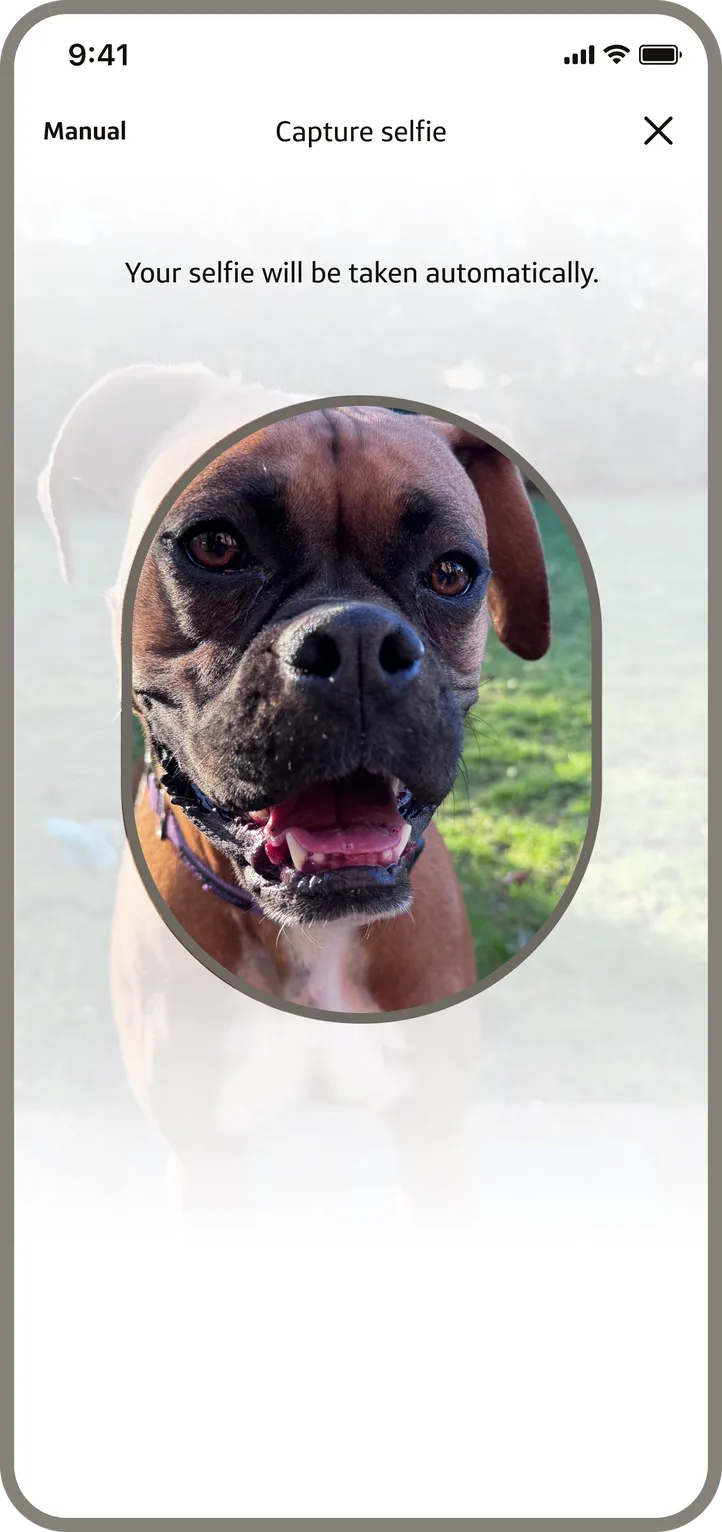
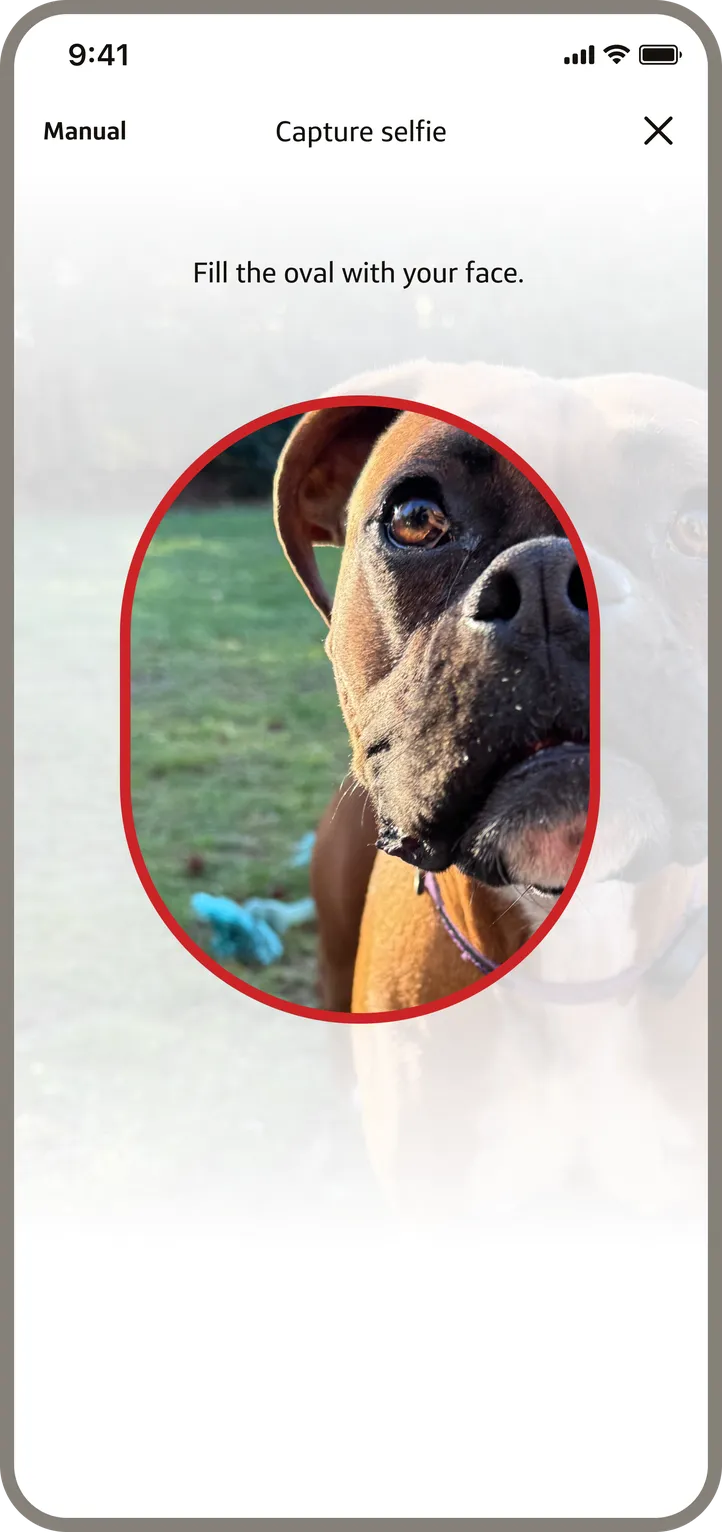
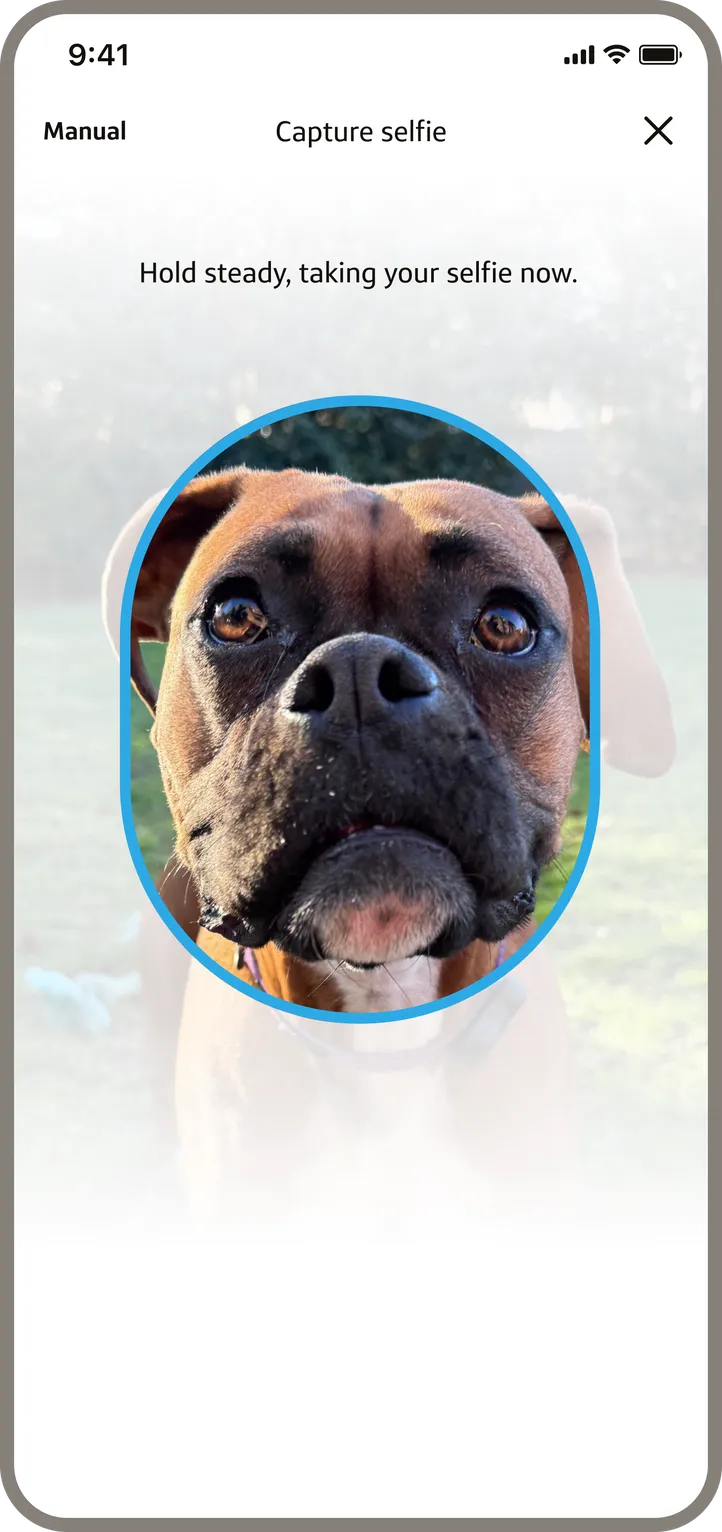
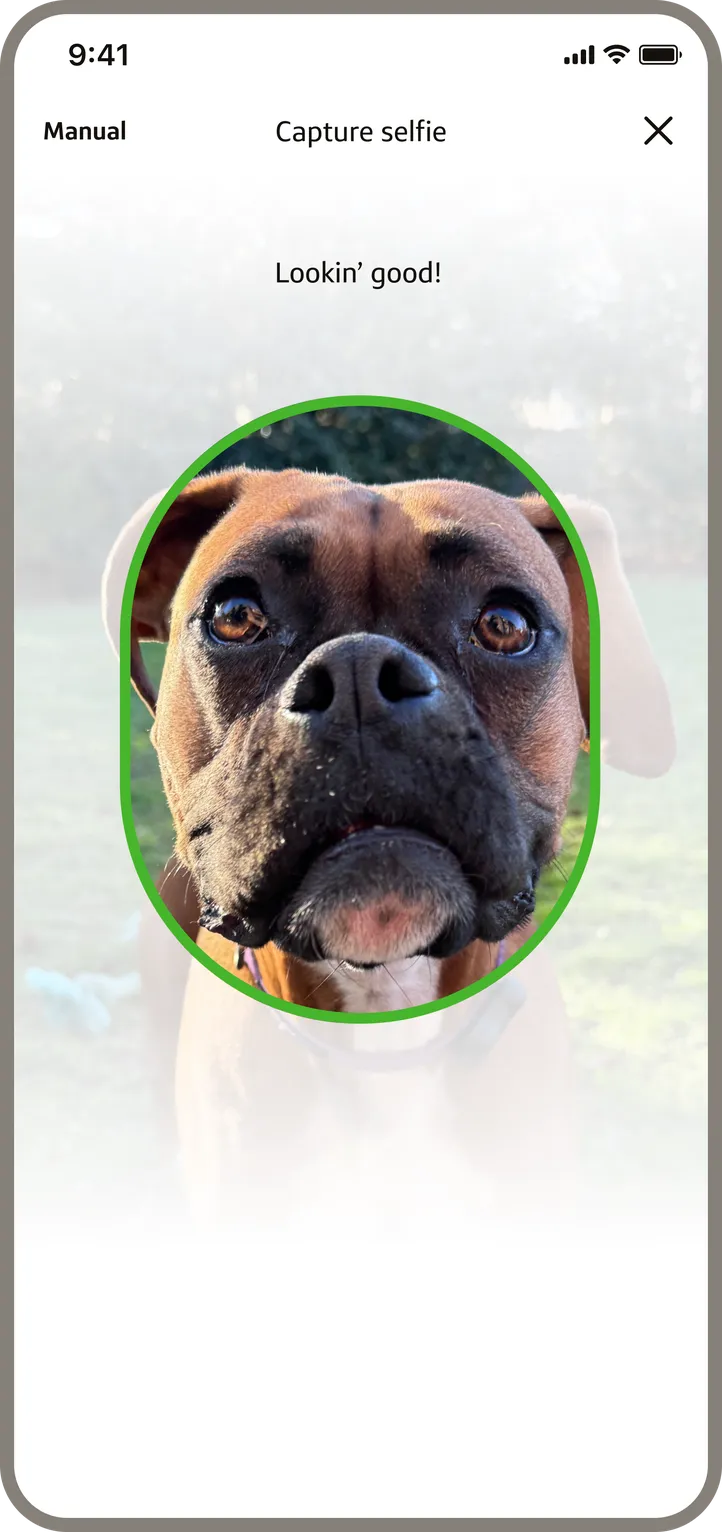
I ran the usability studies on working test builds. A camera step can’t be tested in a clickable prototype.
The check sits between card approval and the customer’s first purchase, so the time it takes is time the customer cannot use the new card.
What changed
The step went to production in April 2023.
- More than 97% of the customers who start the selfie after the ID scan finish it.
- The selfie adds 2% incremental drop-off after ID capture, against the roughly 50% who quit when the ID stood alone.
- More than 125,000 customers had started the flow by the 2023 award nomination.
- The bank regained $90 million a year in instant spend.
The work won Capital One’s Circle of Excellence award in 2023 and was a Fast Company Innovation by Design 2024 finalist in the finance category.
After
In 2023, I ran sentiment research on how customers feel about handing a bank their face, and turned the findings into the 2024 optimization roadmap. That roadmap put live-feedback experiments first and selfie-first designs after them. The follow-on business case, Trusted Selfie, plans for verification that drops the ID dependency altogether.
Two patent applications came out of this line of work, both filed in December 2024 and published in June 2026. One covers context-aware liveness testing (US 2026/0172419 A1), and one covers visual fraud detection during live image verification (US 2026/0170114 A1). Both are pending.