A CRM for CarMax's dealers
The associates who cover CarMax's B2B dealers tracked their accounts by hand, in spreadsheets and tools they had built themselves, and none of it was shared or current. I joined a new team charged with building a full-scale CRM on Salesforce, and field research with those associates set the data model first.
- Product Design
- B2B / Enterprise
- Salesforce
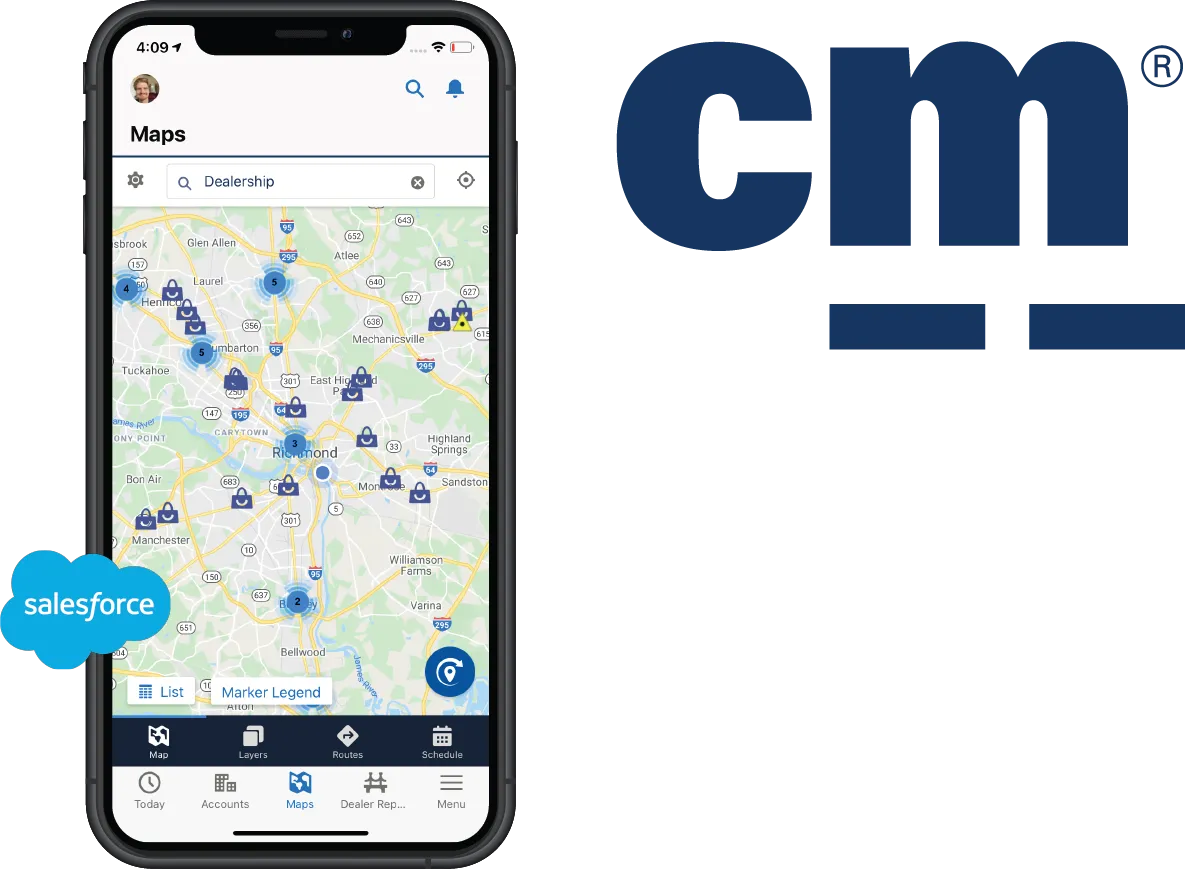
The problem
CarMax has a B2B business most people never see. Small dealerships buy and sell cars with CarMax, and each associate who covered those dealerships tracked their accounts differently, in spreadsheets, paper notes, and tools they had built themselves. Nothing they used was shared, current, or reliable enough for the team to work from.
I joined a new team with a charge to build a CRM for all of CarMax’s B2B business on Salesforce. I had never worked in Salesforce before, so I learned the platform while I ran the discovery research, and I built my opinions about what to design from what the associates in the field told me they needed.
The work
The data model came first
Before we designed screens, I interviewed and observed the associates who cover those dealerships. Three findings changed the architecture.
- A rep often works across several dealerships, so the relationship between reps and dealerships had to be modeled as many-to-many.
- Associates think in dealerships. The account record became the hub that everything else hangs off.
- A lead matures into a registered dealer. Salesforce calls that lead conversion, and the model had to carry the lifecycle from the start rather than add a status field to it later.
I brought those findings into schema workshops with the team. The decisions we made there shaped how B2B data would be structured in CarMax’s enterprise architecture, and we made them before any screen existed.
Scoping the MVP
We phased the scope instead of designing for all of B2B at once. The first release served the associates who cover dealerships in the field, inside MaxOffer, the product dealerships use to sell cars to CarMax. We stayed close to out-of-the-box Salesforce, which kept the build fast and cheap and put a working system in front of those associates early, so we learned from how they used it. Even scoped that way, the release carried maps, mobile, Outlook integration, lead and activity entry, engagement dashboards, and email automation through Marketing Cloud, Salesforce’s tool for building and sending campaigns.
What testing changed
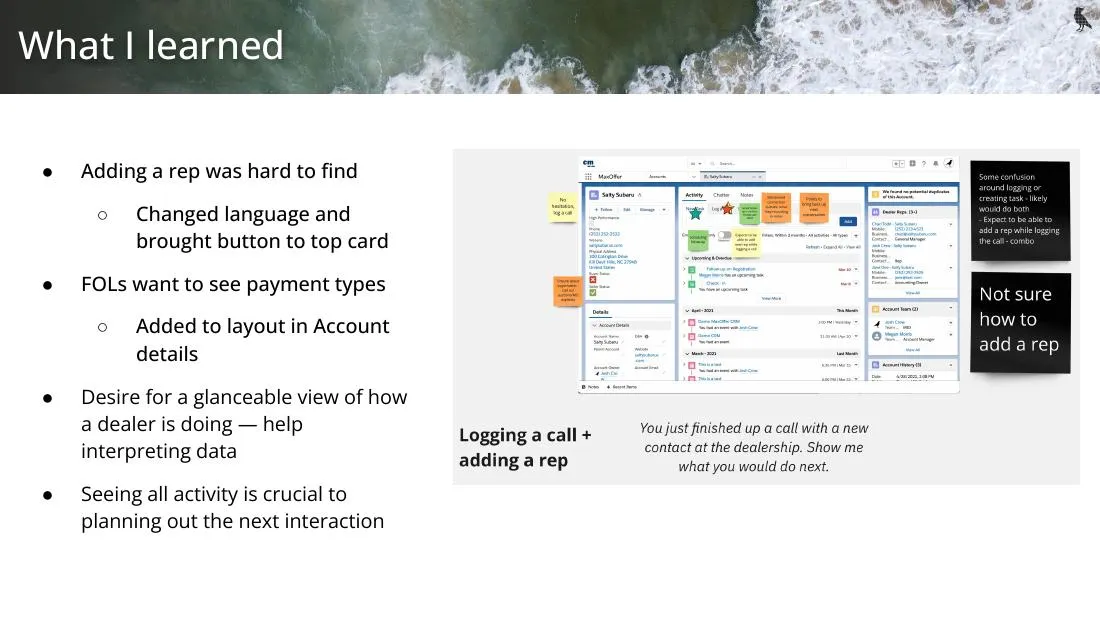
I tested the three main layouts with associates. The sessions changed three things.
- Adding a rep to a dealership was hard to find. I renamed the button and moved the action to the top of the card.
- Associates wanted a dealership’s payment types visible without opening another record, so payment types moved into the account view.
- To plan the next call, an associate needed two things: a quick read on how the dealership was doing, and the full activity history. Both became part of the default layout.
What changed
The MVP went live in about six weeks, and the associates in the field worked in it. Dealership accounts, the reps attached to each account, and the activity history sat in one system, on the data model the research had set.
After
I moved to dual-track once the MVP was live, running weekly discovery alongside delivery so research kept feeding the backlog. Discovery stayed continuous through office hours, design sessions, and monthly surveys.