Patient-specific surgical splints
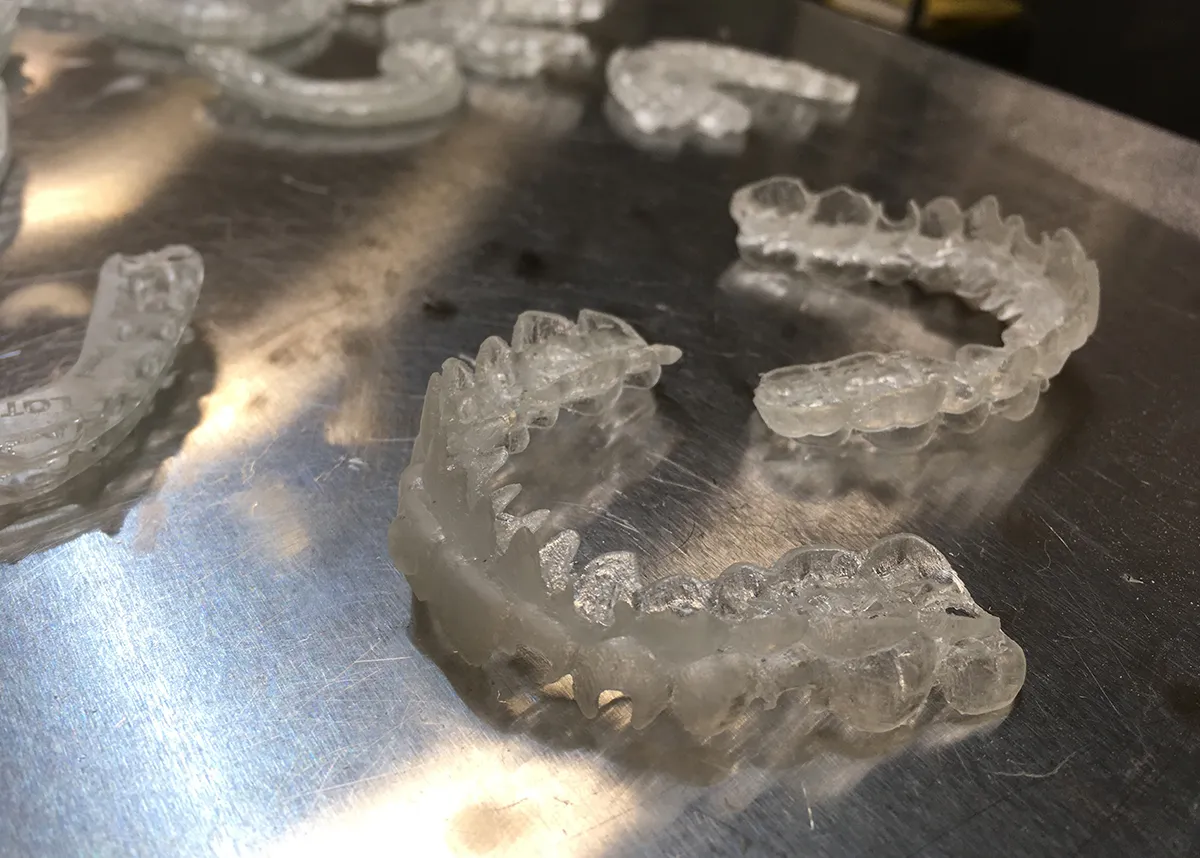
I sculpted splints and surgical guides for facial reconstruction in haptic computer-aided design (CAD) software and printed them on industrial stereolithography machines, each part shaped to a single patient's anatomy. With a coworker, I wrote a script that generated those parts from patient scan data, a proof of concept that moved the company to look seriously at automation.
- Medical Devices
- Automation
- Industrial Design
The problem
3D Systems made the tools surgeons use to rebuild a face: splints that hold bone in position, guides that place plates and screws, and models of an injured patient cut from a computed tomography (CT) scan. None of it came off a shelf. Every case started from one patient’s scan and produced parts that fit that patient and no one else, so a trained person designed each one from scratch.
The work
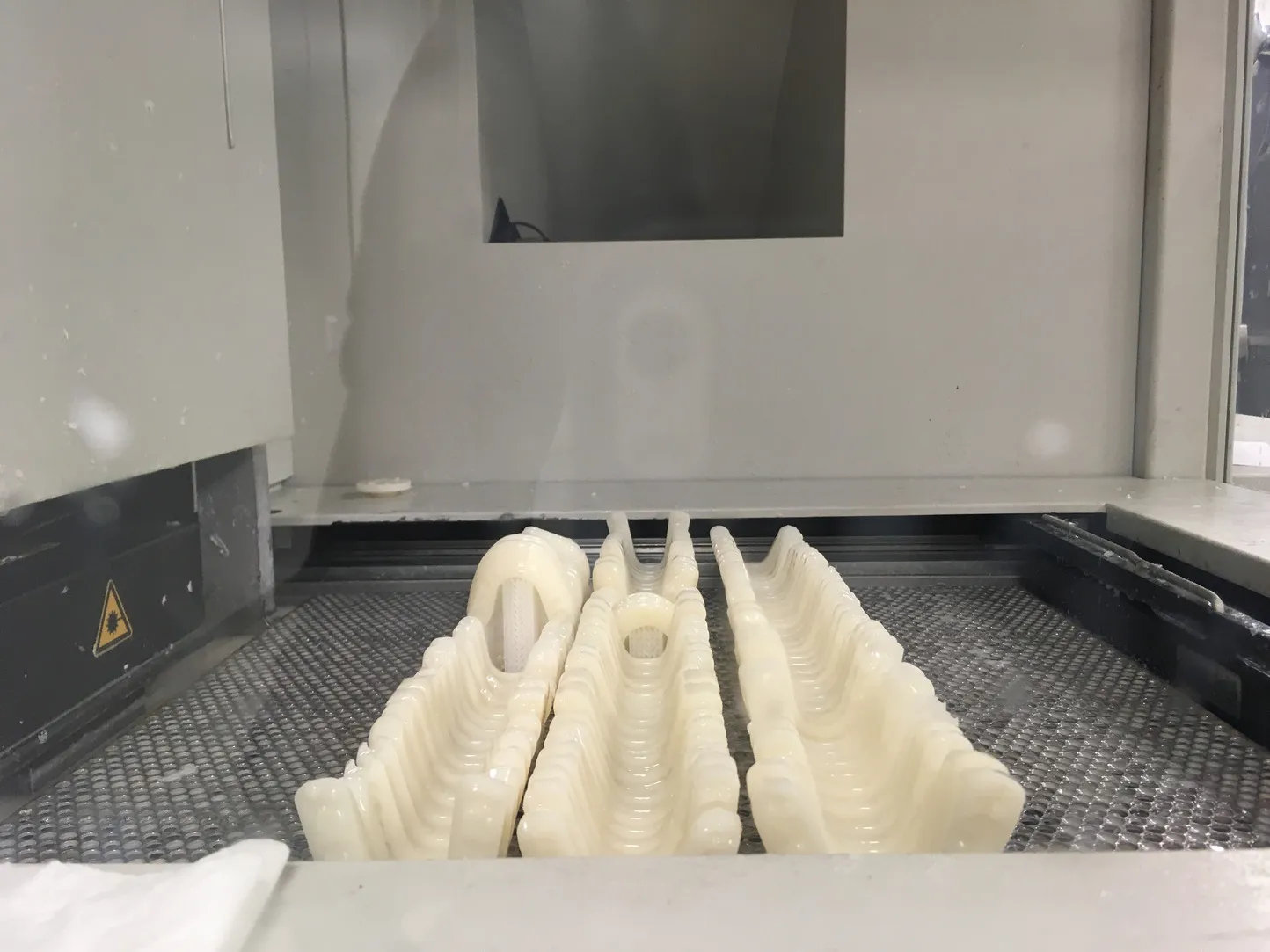
The surgeon planned the operation, an engineer turned the plan into a spec, and I designed and built the parts. Every day, I sculpted in Geomagic Freeform on a haptic arm, batched and printed on industrial stereolithography machines, and inspected each part by hand before it shipped to the operating room.
This was a regulated medical device. The Food and Drug Administration (FDA) set the requirements, and the Health Insurance Portability and Accountability Act (HIPAA) covered the patient data the parts were built from. There was no ship-it-and-iterate. A part was right or it did not go, and the habit the job built was precision held to microns, repeated thousands of times, with a surgeon and a patient on the far end of every error.
Scripting the process
The work was bespoke and manual, and it ran thousands of times, which is the exact shape of a thing that wants to be automated. A coworker had already scripted the patient-report assembly in InDesign. He wrote the code and I tried to break it, and the reports got close to automatic. Then we went after the parts, with a Python script that took a patient’s CT scan, generated a basic splint, and exported an STL file ready to print.
What changed
The proof of concept worked, and it never went into production. Shipping it would have meant validating the pipeline itself against FDA and HIPAA requirements, and we did not take it that far. What the script changed was the argument. After it ran, 3D Systems began looking seriously at automating this kind of production.
After
In 2017, I left for a master’s in human-computer interaction. The question I took with me was how to automate work that depends on expert judgment when a regulator sets the rules, and I have worked on some version of it since.